ServicesVehicle Restraints
Vehicle Restraints in Hazleton
A trailer that creeps away from the dock, or pulls out early, puts a forklift driver at real risk. We repair, service and install vehicle restraints so every trailer stays locked in place until your crew says it can go.
Keeping trailers where they belong
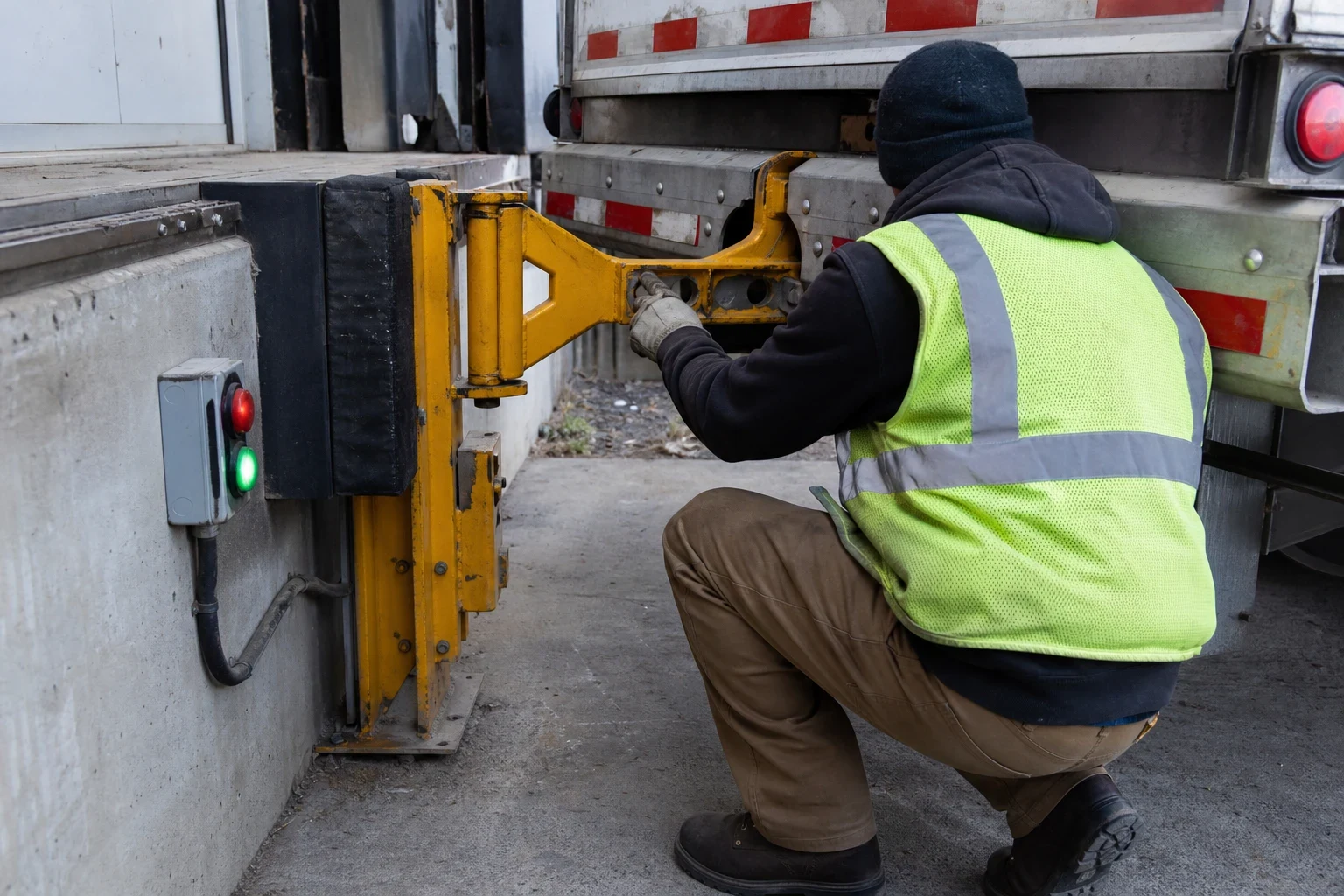
A vehicle restraint holds a trailer against the dock while it is loaded or unloaded. The most common design uses a steel hook that lifts from the dock face and locks behind the bar under the back of the trailer, known as the rear impact guard. Wheel-based models clamp a tire instead, which helps when that guard is bent or missing. Paired with red and green lights inside and out, the restraint tells the driver and your dock crew when it is safe to move.
When a restraint stops engaging or the lights disagree with what the hook is doing, crews start working around it. That is when accidents happen. We get the unit working again, or tell you plainly when it is time for a new one.
From your first call, one person handles your job. The same contact who looks at your restraint schedules the tech, orders any parts and checks back after the work is done. We serve warehouses, distribution centers and receiving docks across Hazleton, West Hazleton, Freeland, Weatherly and nearby.
The restraint work we take on
- 01
Hooks and carriages
A hook that stays down, lets go or sinks once weight comes on gets fixed at the source, whether that is a bent carriage, worn rollers, a snapped spring or a track that binds.
- 02
Motors, pumps and cylinders
On powered restraints we track down faults in the motor, pump, hoses and cylinders, swap out the failed part and prove the fix by engaging an actual trailer.
- 03
Signal lights and sensors
Dead bulbs, bad sensors and misbehaving control panels get traced and repaired, so the red and green lights always tell the truth about the hook.
- 04
Leveler and door interlocks
When a restraint is wired to the dock leveler and overhead door, each step has to happen in the right order. We test that link and put it back the way it was meant to work.
- 05
Installing a new restraint
If fixing the old unit stops paying off, we fit a new hook-style or wheel-based restraint matched to your dock face and the trailers that back in. Our Loading Dock Equipment Installation page explains how a full install goes.
Questions about Vehicle Restraints?
Call(570) 754-9415When a restraint is overdue for service
Trailer comes loose from the hook
If the hook can't find the impact guard, or releases when a forklift drives onto the trailer, that trailer is not secured. Take the door out of use until we have looked at it.
Lights stay red or flash at random
Crews learn to ignore lights that are wrong half the time. A sensor or wiring fault is usually behind it, and it is often a short repair.
Grinding, slow or jerky travel
A carriage that drags or stalls is often packed with debris or running on worn rollers. In Hazleton winters, road salt and slush thrown off trailers speed that wear along.
Oil under a powered unit
A hydraulic leak means lost holding force over time. Catching it early is far cheaper than replacing a pump or cylinder.
Crews reaching for wheel chocks
If your team has quietly gone back to chocks because the restraint is unreliable, that is a clear sign it needs repair.
How a restraint repair goes
- 1
You call and describe the problem
Tell us which door, what the restraint is doing and what brand it is if you know. Your contact notes it all, so you never repeat yourself to someone new.
- 2
We inspect at your facility
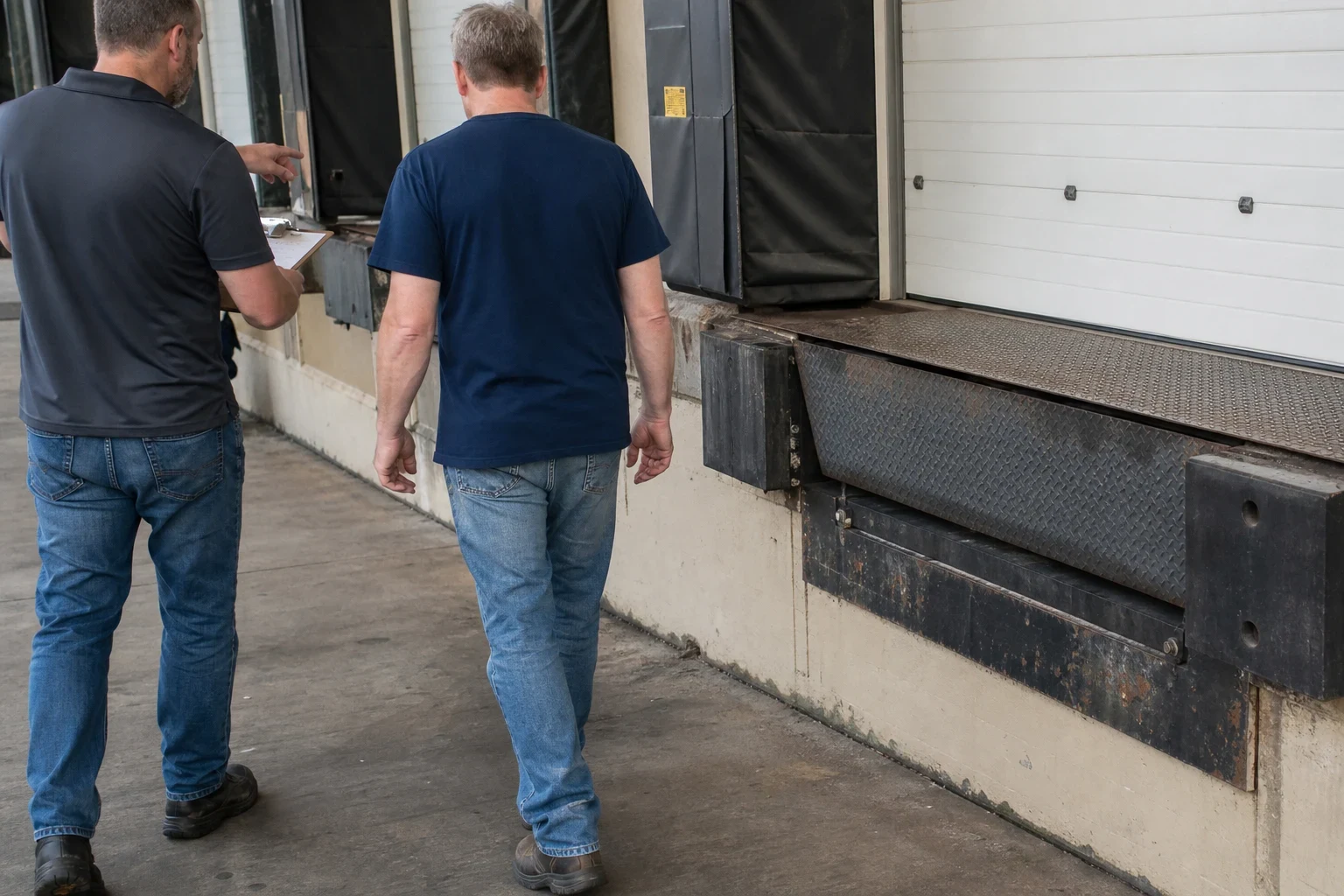
A tech runs the restraint through full cycles, checks the hook, carriage, drive, lights and interlocks, and takes photos of what we find. We work around your receiving schedule to keep downtime low.
- 3
You get a clear repair-or-replace answer
We explain what is wrong in plain terms and give you a written estimate. If a repair will hold, we say so. If the unit is worn past saving, we show you why.
- 4
We fix, test and clean up
Repairs are tested with the restraint engaging a trailer, lights and all. We clear away old parts and debris, and your contact follows up to make sure the door is behaving.
What sets the price of a restraint job
We quote restraint work only after looking at the unit, since one symptom can come from very different problems at two docks. The written estimate splits out parts and labor, so the cost is clear before anyone picks up a tool.
- Manual versus powered
- A manual restraint has less that can break. Powered and hydraulic models need more time to diagnose, and their parts carry a higher price.
- Getting the parts
- Parts for current models are simple to order. Older or discontinued units can mean hunting for parts or replacing the restraint.
- The dock face it mounts to
- A restraint can only hold as well as its mounting. Cracked concrete or a damaged mounting plate means extra work.
- Lights and linked controls
- Problems in the light system, or in the connection to your leveler and overhead door, take longer to trace and check.
Vehicle restraint questions
Do we really need a restraint if drivers set their brakes?
Brakes alone don't stop trailer creep, which happens as forklifts drive in and out and slowly push the trailer away from the dock. They also don't stop a driver who pulls away early. A working restraint guards against both, and OSHA expects trailers to be secured against movement during loading.
Can you work on the restraint brand we already have?
We service most common hook-style and wheel-based restraints. Tell us the make and model when you call, or have whoever is at the dock read the label, and we will let you know what to expect.
What if many of our trailers have damaged impact guards?
Hook-style restraints need a sound rear guard to grab. If your dock sees a lot of trailers with bent or missing guards, a wheel-based restraint may be the better fit. We can talk through the tradeoffs before you commit to anything.
Will you have to shut down the whole dock?
Usually just the door being worked on. We plan around your receiving schedule and keep the other doors open so trucks keep moving.
Should restraints be part of regular maintenance?
Yes. Cleaning the carriage, checking the hook and testing the lights catches problems before a door goes down. Our Loading Dock Preventative Maintenance service covers restraints along with levelers and doors.
Get your restraints holding again
Tell us what your restraint is doing and we will take it from there. One person stays with your job from the first conversation to the final test.