ServicesPreventative Maintenance
Loading Dock Preventative Maintenance in Hazleton
We inspect, adjust and service the equipment at your loading dock on a schedule that fits your shifts. You get a clear report of what we found, what needs attention now and what can wait, from one person who handles your account start to finish.
Catch Wear Before It Costs You a Door
Dock breakdowns rarely come out of nowhere. It begins with a leveler lip that lowers a bit slowly, a door cable with a few broken strands or a bumper worn to its bolts. Ignore them and you end up with a position out of service in the middle of a busy week. Regular maintenance finds these while they are still fast fixes you can plan.
Every visit covers all of your dock positions, and we test equipment the way your crew uses it: setting levelers down on a trailer bed, running doors up and down, engaging restraints. Local winters bring freeze-thaw and road salt carried in by trailers, which wear on hydraulics, springs and seals, so those parts get a close look.
One contact stays with you throughout. That person books your visits, explains what we found and arranges any repairs, so nobody new has to learn your facility's history from scratch.
What a Maintenance Visit Covers
Dock leveler service
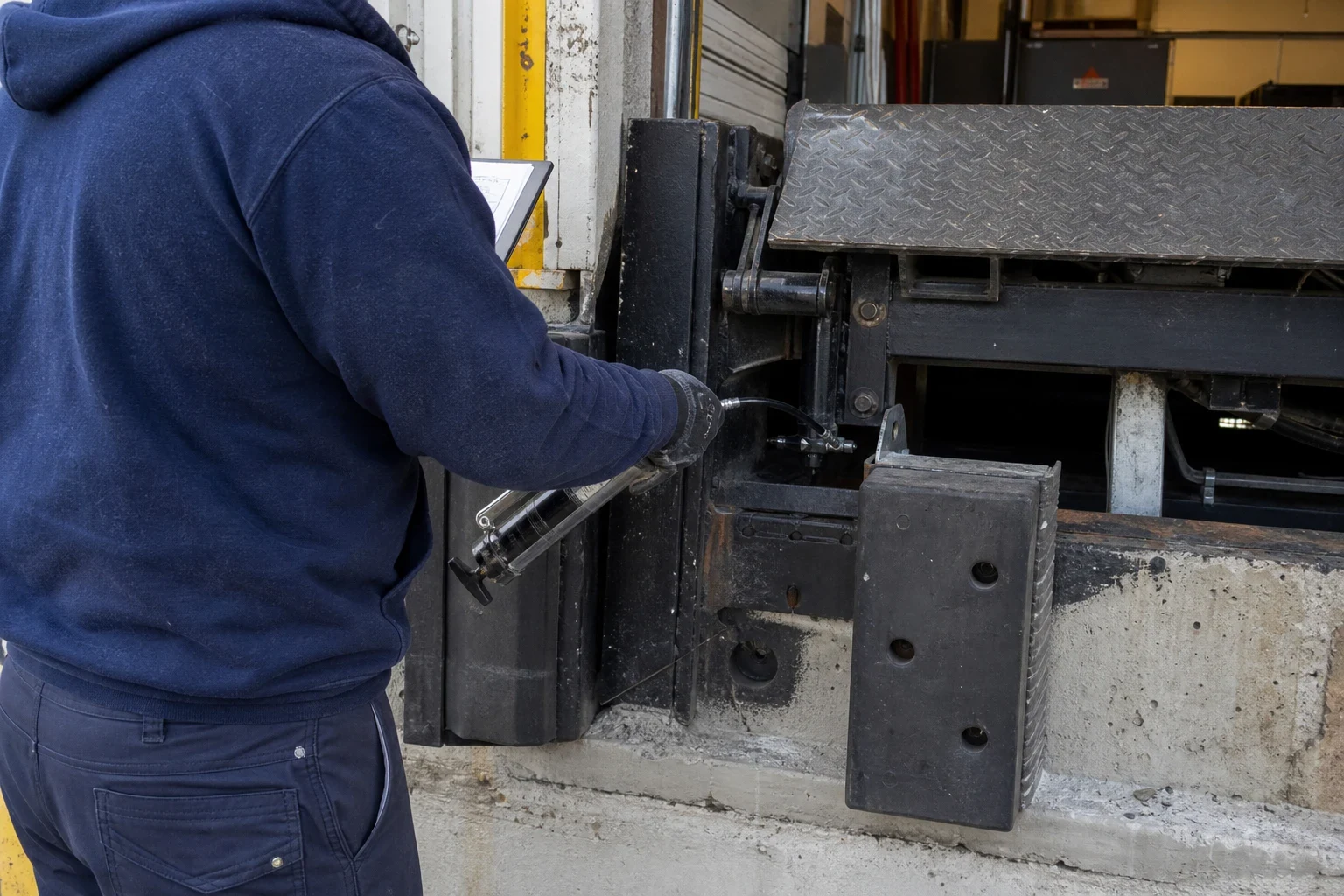
We check hinges, lip operation, hold-down devices, springs and the hydraulic system on each leveler. That includes looking for fluid leaks, topping off or noting fluid condition, lubricating pivot points and adjusting how the lip extends and falls.
Overhead door checks
We inspect springs, cables, drums, rollers, tracks and hinges, then test balance and travel. Worn rollers and loose track brackets are adjusted or flagged before they cause a door to jam or come off track.
Vehicle restraint testing
We engage each vehicle restraint and confirm it locks, releases and signals correctly, including the inside and outside lights. A restraint that does not hold the trailer is a safety issue, so these get careful attention.
Seals, shelters and bumpers
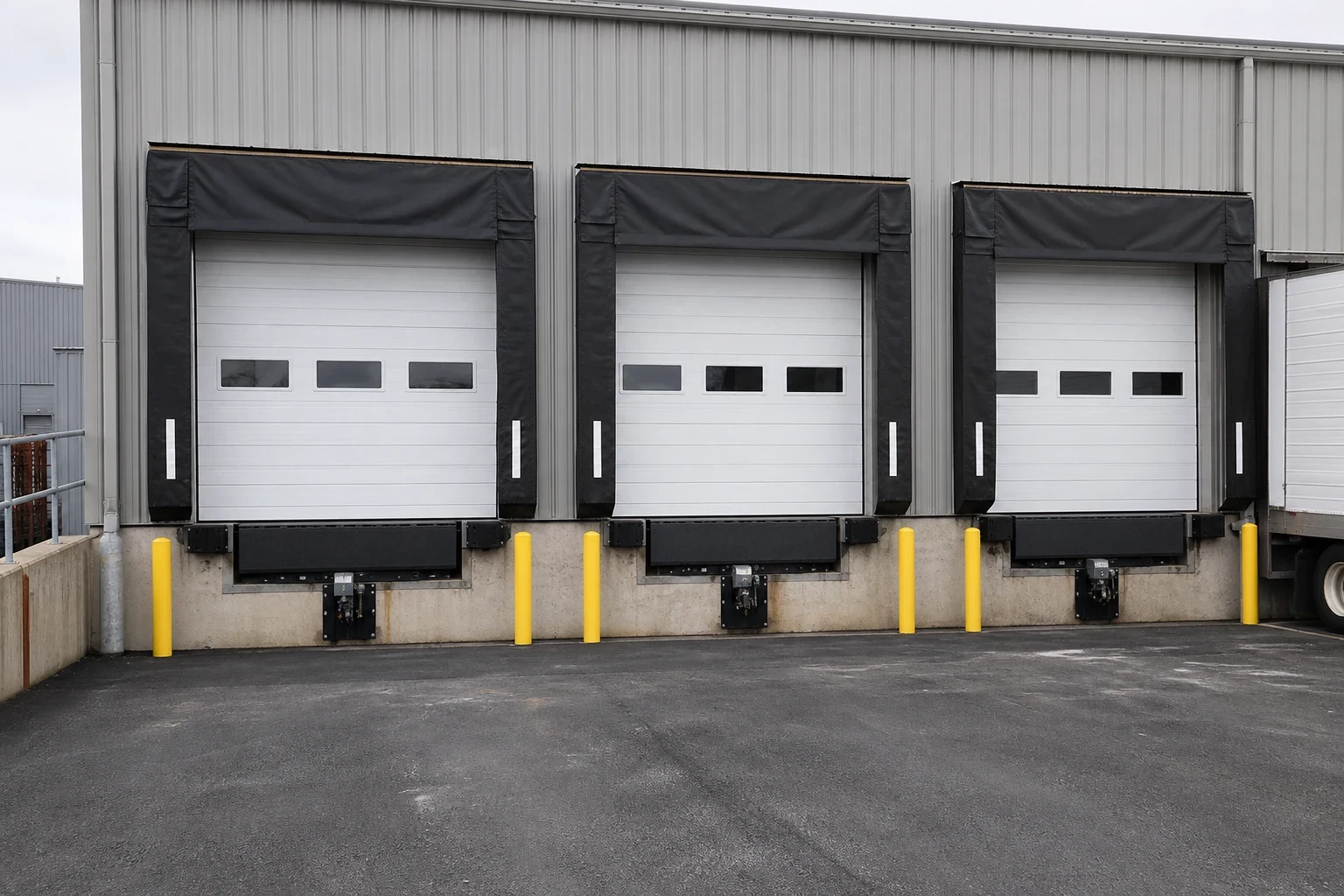
We look for torn dock seal pads, damaged shelter curtains and bumpers worn past the point of protecting the wall. Gaps here mean heat loss and weather getting into the warehouse.
Written findings with photos
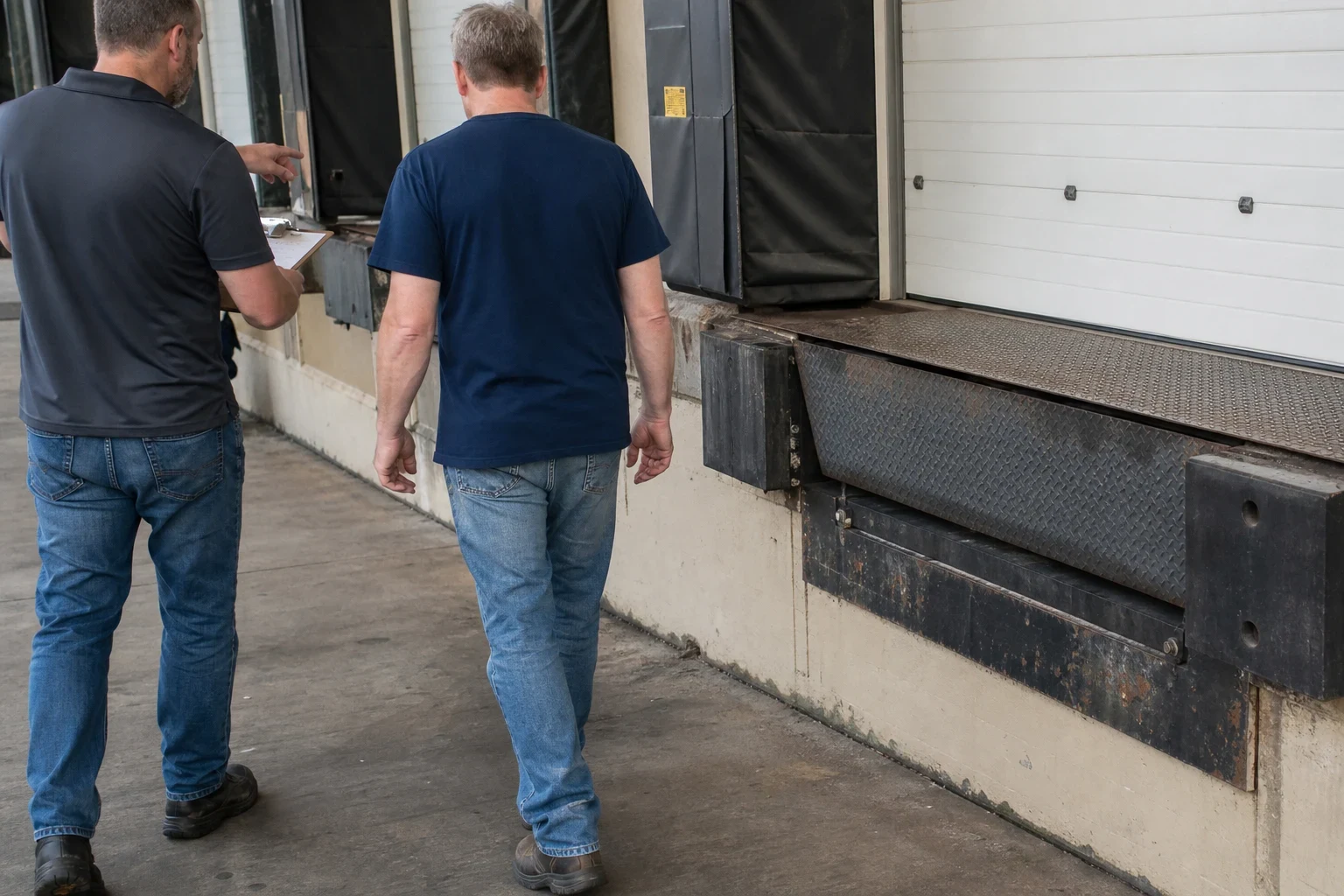
After the visit you get a report for each dock position: what we serviced, what we found and what we recommend, with photos. Items are sorted by urgency so you can plan the budget instead of reacting to it.
Signs Your Dock Is Due for a Visit
- Leveler hangs up or comes down hard
- When the deck pauses, bounces or crashes down, the usual causes are tired springs, low hydraulic fluid or a hold-down that is out of adjustment.
- Doors that clank or run crooked
- Grinding, banging or a door that lands off-level often comes from worn rollers, a stretched cable or a spring that is losing tension.
- Restraint lights misbehave
- When the lights don't line up with what the restraint is really doing, drivers and dock staff lose an important safety cue.
- Cold air at the doors
- Light showing around a parked trailer or a chilly receiving area usually means seals or shelter curtains are torn.
- You only call when something breaks
- If each service call begins with a position already down, a planned schedule generally costs you less lost time.
How Your Maintenance Plan Runs
- 1
Start with a phone call
Tell us how many dock doors you have, what equipment is at each one and how hard your shifts run. Your contact also asks what has broken in the past, so the first visit focuses where it should.
- 2
Baseline inspection
We go door by door and record the make of each unit, how it is holding up and any faults. That record shapes your schedule and gives us a way to track wear over time.
- 3
Scheduled service
Visit frequency is based on your traffic and the age of your equipment, and we book around your receiving hours. Only one or two doors are worked on at once, so the others keep running.
- 4
Report and next steps
Your contact goes over the report with you, flags anything urgent and prices any repairs. When you approve one, the same person schedules it and tells you when it is done.
What Sets Your Maintenance Price
The price comes down to the equipment at your dock and how much use it gets. We go through every line of the estimate before booking a visit. Repairs we find along the way get their own quote, and none happen until you approve them.
- How many positions you have
- Each added position is more equipment to check and service every visit.
- What the equipment is and its age
- Hydraulic, air-powered and mechanical levelers, and each kind of door, call for their own checks. Older units tend to need more adjusting and a closer look.
- How often we visit
- A busy distribution center can need more frequent visits than a store that takes in a handful of trucks a day.
- Parts and timing
- Seals, rollers, springs and other replacement parts add cost when they are needed. Coming outside regular hours to stay clear of your peak receiving can change the price too.
Questions About Dock Maintenance
- How often should we schedule visits?
- It varies, since a dock with trailers coming in day and night wears far quicker than one with a few deliveries a week, and the age of your levelers and doors plays a part. After the starting inspection we recommend an interval, then tighten or loosen it once we see how fast parts wear at your site.
- Does maintenance stop our receiving?
- Not when it is planned right. We take one or two positions at a time and stay clear of your busiest hours, so trucks keep using the other doors.
- Will you maintain equipment someone else installed?
- Yes. We service dock levelers, overhead doors, vehicle restraints and seals from many manufacturers. If parts are hard to get or a unit is close to worn out, we will say so plainly.
- What if you spot something that needs fixing?
- It goes in your report with photos and a note on how urgent it is. We quote it, and your contact books the repair only once you approve. Minor adjustments are taken care of during the visit.
- Does maintenance support our safety compliance?
- Inspection records show that restraints, levelers and other equipment are checked and kept working. You get written reports to keep on file. We are not an inspector, but our records back up your own safety program.
Start With a Baseline Inspection
Tell us about your dock and we will plan a first visit around your schedule. From then on, one person keeps track of your equipment and keeps you informed.