ServicesEquipment Installation
Loading Dock Equipment Installation in Hazleton
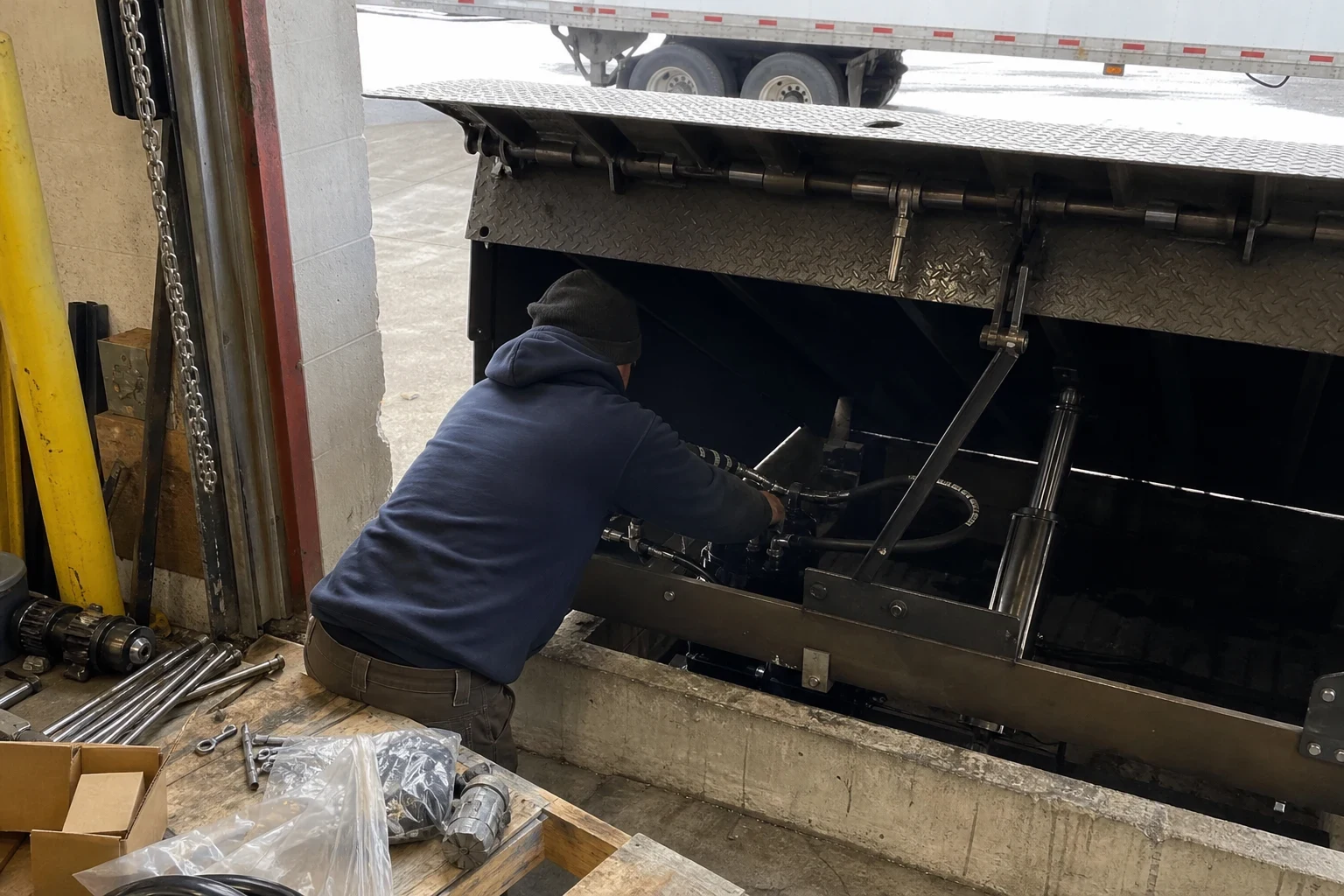
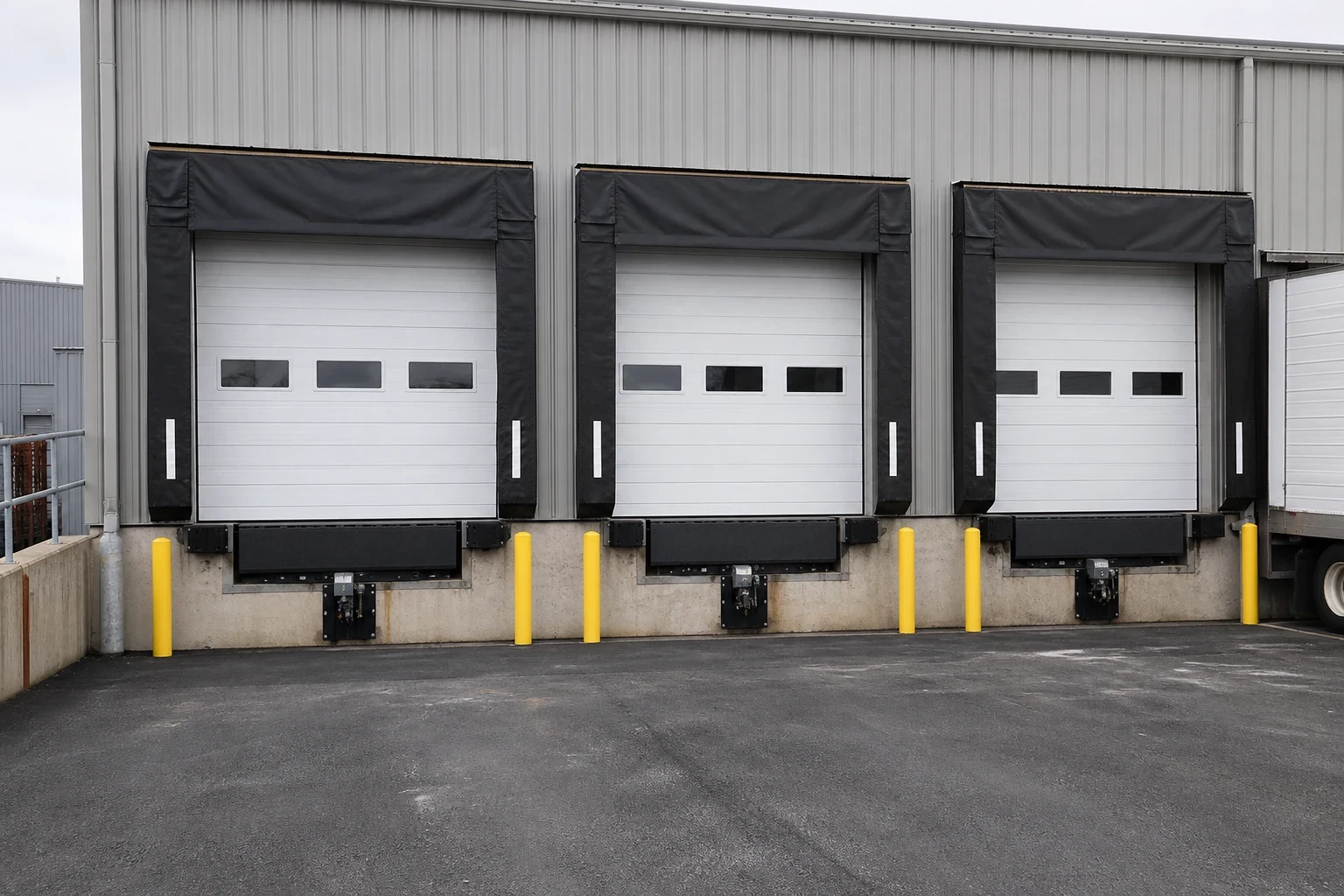
We install dock levelers, vehicle restraints, overhead doors and seals at working facilities. One person measures your dock, plans the work around your receiving schedule, keeps you updated on install day and walks you through the finished equipment before we leave.
Dock equipment planned around the way you load
New equipment makes sense when you are outfitting a new building, opening another door position, or retiring equipment that can no longer be repaired. It is also worth a look when the trucks backing in have changed and your leveler or seals no longer suit their bed heights.
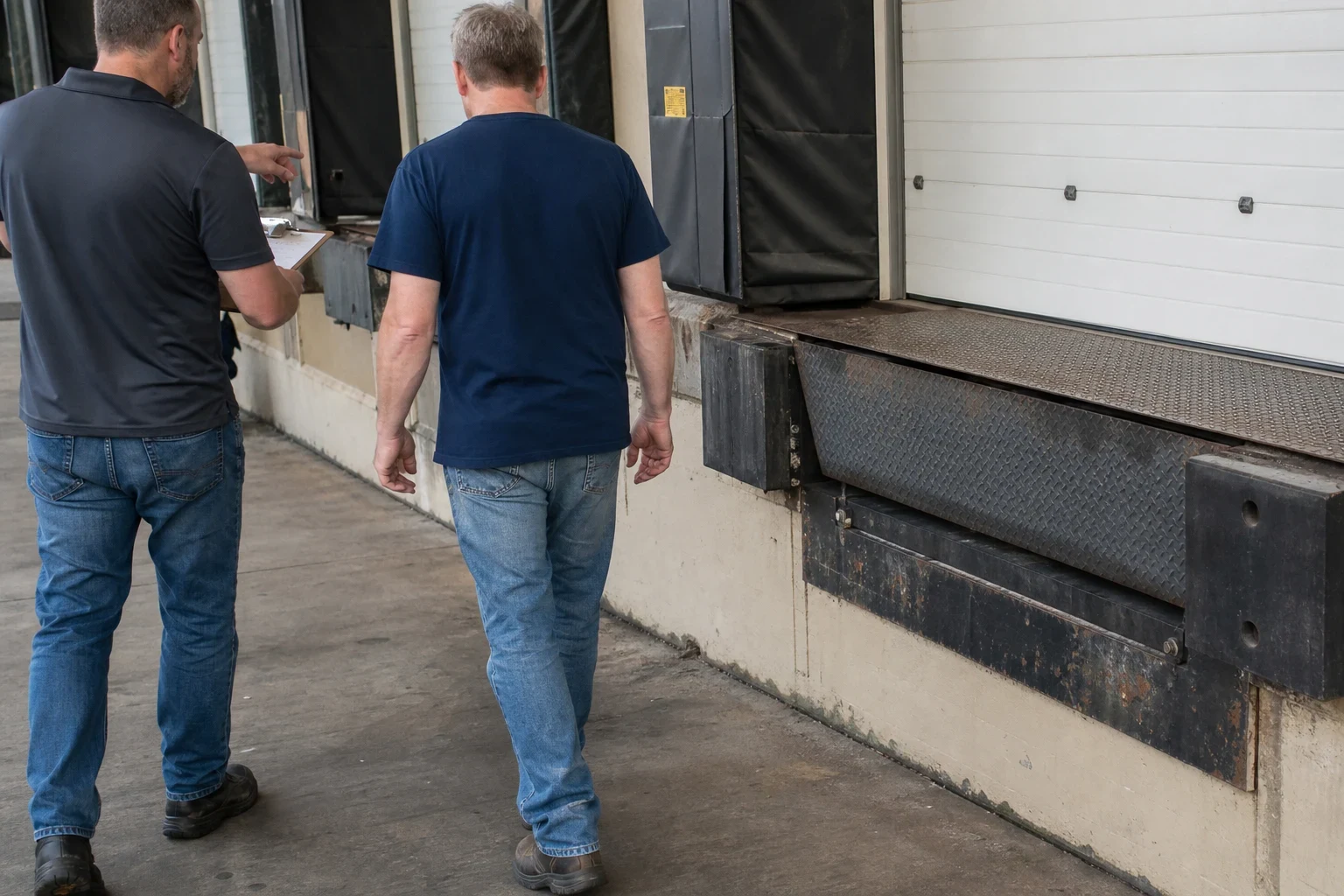
A solid install begins with the dock. Before we order anything, we check pit dimensions, curb angles, bumper height and concrete condition, and confirm where power and controls will go. That step keeps a leveler from sitting above the floor line and makes sure a restraint can reach the trailer's rear impact guard.
One person handles your job from start to finish. Whoever looks at your dock also answers your questions, books the crew, oversees install day and remains your contact after the work is done.
What an installation covers
- 01
Site measurements
We measure each door position, pit, approach and dock height. We note trailer types you receive so the equipment fits your real traffic.
- 02
Dock levelers
We set hydraulic, air-powered or mechanical levelers in new or existing pits, shim and weld them level, and test the full range of travel with a loaded lip.
- 03
Vehicle restraints
We mount restraints to the dock face, run wiring to the inside control panel and set up the light communication for drivers and dock staff.
- 04
Overhead and high speed doors
We hang doors, set springs or drives, and adjust limits so the door closes square without slamming. Rolling grilles can be added where you need security with airflow.
- 05
Seals, shelters and bumpers
We fit seals or shelters to your door size and the trucks you see most, and anchor bumpers to protect the building face from trailer impact.
- 06
Startup and walkthrough
Before we leave, we run every unit with your staff, show the safe operating sequence and clean up packaging, offcuts and debris.
Questions about Equipment Installation?
Call(570) 754-9415Signs a new unit makes more sense than another repair
One unit keeps showing up on work orders
When a leveler or door needs a technician every few months, you pay for parts and for the door sitting idle. At some point new equipment costs less, and we will tell you honestly where yours stands.
Trailers don't match the dock anymore
Carts that bottom out or a lip that falls short of some beds suggest your equipment no longer fits the trucks arriving today.
Cold air coming in at the doors
Worn seals and gaps around doors let winter air inside, which affects your staff and any goods that need to stay at a set temperature.
A busy door with no restraint
Trailers that creep or pull out early are a real safety hazard. A vehicle restraint is one of the most direct ways to cut that risk.
Adding a door or a building
Expansions and new tenants usually call for a complete set of dock equipment planned at once instead of one piece at a time.
How an install runs
- 1
Phone call and site visit
You call, tell us what is going on, and we set a time to see the dock. Your contact measures, takes photos and asks about your shipping hours.
- 2
Written estimate
You get a line-item estimate showing the equipment, the labor and any concrete or electrical work. If something is optional, we say so.
- 3
Scheduling around your docks
We plan the work door by door so you can keep receiving at other positions. Your contact confirms dates and lets you know what the crew will need, such as power and clear access.
- 4
Install day
The crew sets the equipment, welds and anchors it, and connects controls. Your contact checks in with you during the day so nothing catches you off guard.
- 5
Testing and handover
We cycle each unit, train your team on safe use, clean the area and leave you with the equipment paperwork. Questions after that still go to the same person.
What moves the price of new dock equipment
We base the price on what we find at your dock rather than a standard package. Each part of the job gets its own line on the estimate, and your contact will go over any of them with you before you commit.
- Type of equipment
- A mechanical leveler, a hydraulic one and a powered restraint all carry different equipment and labor costs. Doors vary by size, material and drive type.
- Condition of the pit and concrete
- Cracked curbs, worn pit edges or a pit that is the wrong size may need concrete work before new equipment can go in.
- Electrical and controls
- Powered levelers, restraints and doors need power at the right spot. Running new circuits or integrating controls adds to the job.
- Number of positions
- Installing at several doors in one visit usually uses crew time more efficiently than spreading the work across separate trips.
- Removal of old equipment
- Taking out and disposing of an old leveler, door or restraint is part of many installs and is listed on the estimate.
Questions about installs
Can we keep shipping during the install?
Usually, yes. We take one door position at a time and work around your busiest receiving hours. Before the crew shows up, your contact confirms which doors will be closed and for how long.
Must we buy the equipment through you?
We can provide it through our loading dock equipment sales service, so ordering and installation stay with one contact. If you already own the equipment, call and describe it so we can discuss whether it fits your dock.
How long does it take to install one leveler?
That depends on the pit. Swapping a unit into a sound pit is much quicker than a job that needs concrete repair or new electrical. After the site visit, we give you a realistic timeline.
Who do we contact if something seems wrong after the install?
The person who handled your job. They know what went in and how, so there is no need to explain your dock again to someone else.
Is it worth adding a restraint when we replace a leveler?
At busy doors it is worth a look, because restraints help stop trailer creep and early pull-aways. We lay out the options without pushing anything you don't need.
Ready to plan your dock equipment?
Tell us what you are installing and how your dock runs. We will set up a site visit and you will have one person to talk to from the first measurement to the final cleanup.